Beyond San Pedro: The Monterrey Neighborhoods Savvy US Buyers Are Quietly Scooping Up
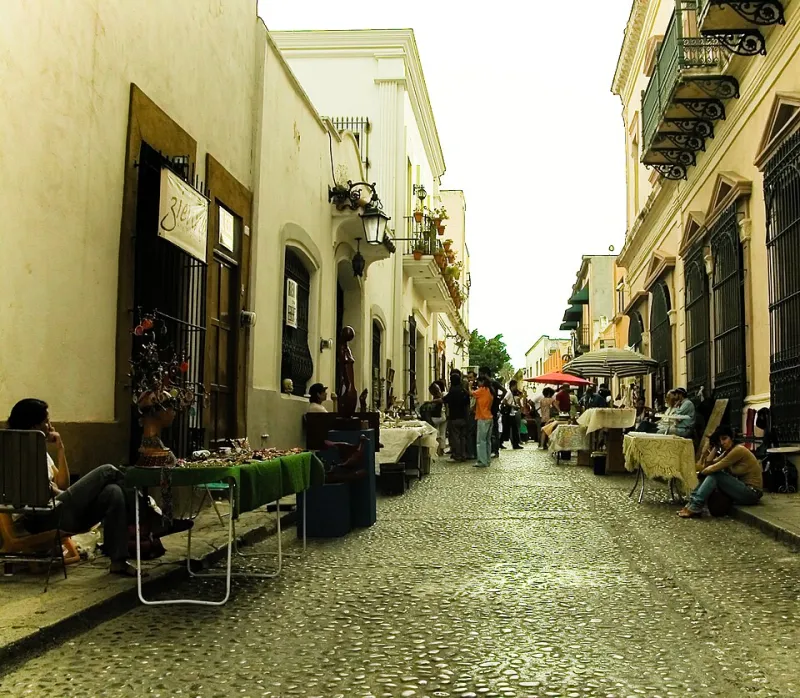
Photo: bertobox, CC BY-SA 2.0, via Wikimedia Commons
Ask anyone in the Monterrey real estate scene where Americans should buy, and you'll probably hear the same answer: San Pedro Garza García. And sure, San Pedro is great — polished streets, international schools, upscale dining. But here's the thing: if you're arriving in 2024 expecting to find a deal there, you're about three years too late.
The buyers who are actually winning right now? They're looking at the neighborhoods that San Pedro used to be before everyone figured it out.
We spent time on the ground — talking to US expats, local brokers, and relocation specialists — to identify five districts where the value is real, the lifestyle is compelling, and the window to buy before prices climb is still cracked open.
Valle Oriente: The Business District That's Becoming a Live-Work Destination
Valle Oriente has long been Monterrey's corporate spine — glass towers, headquarters for multinational companies, and the kind of infrastructure that keeps business travelers happy. What's changed recently is that developers have started layering in residential towers, boutique hotels converted into condo complexes, and a walkable restaurant scene that didn't exist five years ago.
For American remote workers who need to occasionally meet clients or co-work in a professional environment, Valle Oriente hits differently than a purely residential neighborhood. You're steps from major tech and manufacturing offices, which matters if your income is tied to nearshoring clients.
Price-wise, you're looking at condos ranging from roughly $120,000 to $250,000 USD depending on size and finishes — noticeably below comparable San Pedro inventory. Brokers we spoke with noted that prices in the area have climbed about 11% year-over-year, and the pipeline of new commercial tenants is only adding fuel.
"I bought here in 2022 thinking it was a compromise," said Marcus, a software consultant from Austin who relocated with his family. "Now my neighbors are doing the same commute I do — which is zero miles — and paying twice what I did."
Cumbres: Suburban Comfort at a Fraction of the Price
If your frame of reference is a quiet American suburb — good schools, big-box retail nearby, neighbors who keep their lawns tidy — Cumbres is going to feel immediately familiar. This large residential district in the northwestern part of the city has been a favorite among middle-class Monterrey families for decades, and it's increasingly catching the eye of American families priced out of their home markets.
Houses here — actual houses, not just condos — can be found in the $150,000 to $300,000 USD range. For buyers coming from markets like Denver, Dallas, or Seattle, those numbers are almost disorienting. Three bedrooms, a garage, a yard, a neighborhood with functioning infrastructure.
The trade-off is that Cumbres sits farther from Monterrey's nightlife and cultural core, but proximity to major highways makes it manageable. Several US expat families we connected with specifically cited the quality of nearby private schools as a deciding factor.
Barrio Antiguo: The Cultural Bet That's Starting to Pay Off
Barrio Antiguo is Monterrey's oldest neighborhood and, for a long time, it carried a reputation that kept buyers cautious. That's shifting. A wave of restoration projects, art galleries, craft breweries, and boutique short-term rentals has transformed the district into something that feels more like Mexico City's Roma Norte than the rough-around-the-edges area it once was.
For buyers interested in Airbnb income or long-term appreciation driven by gentrification, Barrio Antiguo is arguably the most interesting bet on this list. Entry points for renovated properties start around $80,000 USD, though turnkey options with modern finishes run higher. The short-term rental market here is active, particularly around festival seasons and university events.
The risk, of course, is that urban revitalization isn't guaranteed. But the public investment in the area — new lighting, street improvements, increased security presence — signals that the city is committed to the transformation.
Monterrey Centro Expansion Zones: Infrastructure-Led Opportunity
Around Monterrey's city center, several transitional zones are benefiting from public infrastructure investment tied to the 2028 FIFA World Cup preparations and broader urban renewal initiatives. New metro extensions, road improvements, and commercial development are repositioning areas that were previously overlooked.
Savvy buyers are tracking these infrastructure announcements closely. When a new transit stop lands in a neighborhood, property values tend to follow within 18 to 36 months. Investors who bought near the Línea 3 metro extension before it opened saw meaningful appreciation, and similar patterns are expected in zones currently under development.
Prices in these transitional zones remain low precisely because they're transitional — expect to do some due diligence on construction timelines and neighborhood trajectory before committing.
Carretera Nacional Corridor: Mountain Views and Growing Connectivity
Stretching southeast from the city toward the Sierra Madre foothills, the Carretera Nacional corridor has attracted buyers who want space, scenery, and a quieter pace without fully leaving the metro area. Think large lots, cooler temperatures thanks to elevation, and a growing cluster of upscale residential developments.
This corridor appeals particularly to retirees and semi-retired Americans who want the Monterrey infrastructure and healthcare access without the density of urban living. New road improvements have cut commute times into the city significantly, and several gated communities here offer amenities — golf, equestrian facilities, community clubhouses — that rival anything in comparable US retirement destinations at roughly half the cost.
Entry-level homes start around $200,000 USD, with luxury properties topping out well above that, but still sitting below San Pedro equivalents.
How to Think About Neighborhood Selection in 2024
The common thread running through all five of these areas is timing. Each one is in a different stage of its growth curve, which means the right fit depends on what you're optimizing for — rental income, long-term appreciation, lifestyle quality, or some combination.
A few things worth keeping in mind as you evaluate:
- Work with a local buyer's agent, not just a developer's sales team. Independent agents have no incentive to steer you toward a specific project.
- Visit before you buy. Monterrey's neighborhoods have distinct personalities that don't fully translate through listing photos.
- Check infrastructure plans. The city's development pipeline is publicly accessible, and knowing where roads, transit, and commercial zones are headed can meaningfully inform your decision.
- Factor in HOA and maintenance costs, particularly for gated communities and high-rise condos, when comparing prices across neighborhoods.
The buyers who found San Pedro before it became San Pedro weren't lucky — they were paying attention. The same opportunity exists right now in the neighborhoods above. The question is whether you'll act on it before the rest of the market does.
Thinking about exploring these neighborhoods in person? Check our open house listings to find properties in these districts and schedule a visit.