What the IRS Doesn't Tell You About Owning Property in Monterrey
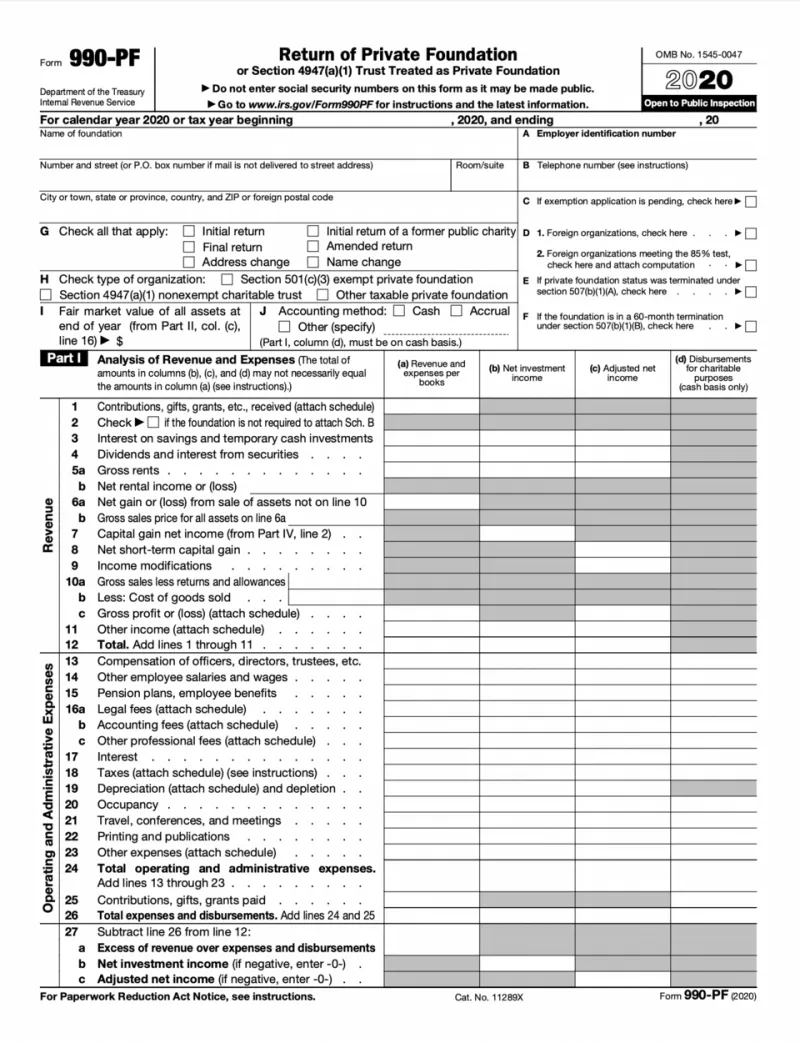
Photo: United States Government, Public domain, via Wikimedia Commons
Let's be honest: nobody buys property in Monterrey thinking about tax forms. You're thinking about that rooftop terrace in Valle Oriente, or the appreciation potential of a new-build in Cumbres, or maybe just the thrill of owning something real and tangible in one of Latin America's most dynamic cities. The tax stuff? That comes later.
Except it shouldn't. Because for US citizens, owning foreign real estate triggers a web of reporting obligations that can catch even savvy investors completely off guard. The good news is that none of this is insurmountable — and once you understand the rules, you can actually structure your ownership in ways that are surprisingly efficient. Let's walk through it.
You're Taxed on Worldwide Income — Full Stop
The US is one of the very few countries on earth that taxes its citizens based on citizenship rather than residency. That means whether you're living in San Antonio or splitting your time between Monterrey and Miami, the IRS wants to know about every dollar (or peso) you earn from your Mexican property.
Rental income from a Monterrey condo? Taxable in the US. Sold your property for a gain? That profit needs to be reported on your federal return. This applies even if you've already paid taxes on that income in Mexico under the bilateral tax treaty between the US and Mexico — which, fortunately, does exist and can help you avoid being taxed twice on the same money.
The Foreign Tax Credit (Form 1116) is your best friend here. If you paid Mexican income tax on rental earnings or capital gains, you can generally claim a dollar-for-dollar credit against your US tax liability on the same income. It doesn't eliminate your US filing obligation, but it significantly reduces the sting.
FBAR: The Filing That Trips Up the Most People
Here's where things get tricky. The Foreign Bank Account Report — better known as FBAR — requires US persons to disclose any foreign financial accounts where the aggregate value exceeded $10,000 at any point during the calendar year. This is filed separately from your tax return, through FinCEN's BSA E-Filing System, with a deadline that now automatically aligns with the April 15 tax deadline (with an automatic extension to October 15).
Now, does owning a Mexican property directly trigger an FBAR? Not necessarily — real estate held directly in your own name is generally not considered a "financial account" under FBAR rules. But here's where it gets nuanced: if you hold your Monterrey property through a Mexican bank trust (known as a fideicomiso), or through a Mexican corporation or LLC-equivalent, you may very well have FBAR reporting obligations depending on how those structures are set up.
The penalties for non-compliance are not gentle. Non-willful violations can run $10,000 per account per year. Willful violations can reach the greater of $100,000 or 50% of the account balance. This is not an area to wing it.
The Fideicomiso Question
Speaking of fideicomisos — US buyers in Monterrey sometimes use this Mexican bank trust structure, particularly for properties in restricted zones (within 50 kilometers of the coast or 100 kilometers of a border). While Monterrey itself isn't in a restricted zone, some buyers still opt for a fideicomiso or a Mexican entity for liability or estate planning reasons.
If you go the corporate route — say, a Mexican Sociedad Anónima (S.A.) — you're now looking at potential Form 5471 filing requirements with the IRS, which applies to US persons who are officers, directors, or shareholders of certain foreign corporations. These forms are notoriously complex and expensive to prepare. Make sure your accountant is fluent in international tax before you decide on your ownership structure.
Mexican Capital Gains: What Happens When You Sell
Mexico imposes its own capital gains tax on real estate sales, and the rate can vary depending on whether you're a resident or non-resident, the declared value of the property, and how long you've held it. Non-residents typically face a flat withholding rate applied to either the gross sale price or the net gain — your notario (the Mexican attorney who handles all real estate closings) will calculate this at closing.
Here's the planning opportunity: Mexico allows sellers to deduct certain costs — original purchase price, improvements, closing costs, and inflation adjustments — from the taxable gain. Keeping meticulous records of every peso you've spent on your property from day one isn't just good housekeeping; it's potentially thousands of dollars in tax savings when you eventually sell.
On the US side, that same gain is reportable as a foreign capital gain. Long-term rates apply if you've held the property more than a year. And yes, you can apply the Foreign Tax Credit for any Mexican capital gains tax paid against your US liability on the same transaction.
FATCA and the Big Picture
The Foreign Account Tax Compliance Act (FATCA) added another layer of disclosure for US taxpayers with significant foreign financial assets. If the total value of your foreign assets exceeds certain thresholds (starting at $50,000 for single filers, higher for married couples and those living abroad), you'll need to file Form 8938 with your regular tax return.
Again, directly-held real estate doesn't count toward the FATCA threshold — but interests in foreign entities that hold real estate do. Seeing a pattern here? Your ownership structure matters enormously.
Practical Steps to Stay Ahead of It
None of this should scare you away from what could be a genuinely excellent investment. But it does mean you need the right team around you before you buy, not after. A few action items worth prioritizing:
- Hire a CPA with international tax experience — not just someone who's done a few expat returns, but someone who regularly works with US citizens owning Mexican real estate.
- Consult a Mexican tax attorney alongside your US advisor. The two legal systems interact, and you need someone fluent in both.
- Decide on your ownership structure early. Changing it later can trigger additional tax events.
- Document everything from day one — purchase price, closing costs, renovation receipts, property management fees. All of it.
- Set calendar reminders for FBAR and FATCA deadlines. Missing them is expensive.
Monterrey's real estate market is genuinely compelling right now, and US buyers are in an increasingly strong position to take advantage of it. The cross-border tax picture is complex, but it's manageable — and for buyers who do their homework, it's absolutely worth it.
This article is for informational purposes only and does not constitute tax or legal advice. Consult a qualified tax professional regarding your specific situation.