Cranes, Capital, and Opportunity: Inside Monterrey's New Construction Wave
Photo: Maina Pat Mbae, CC BY-SA 4.0, via Wikimedia Commons
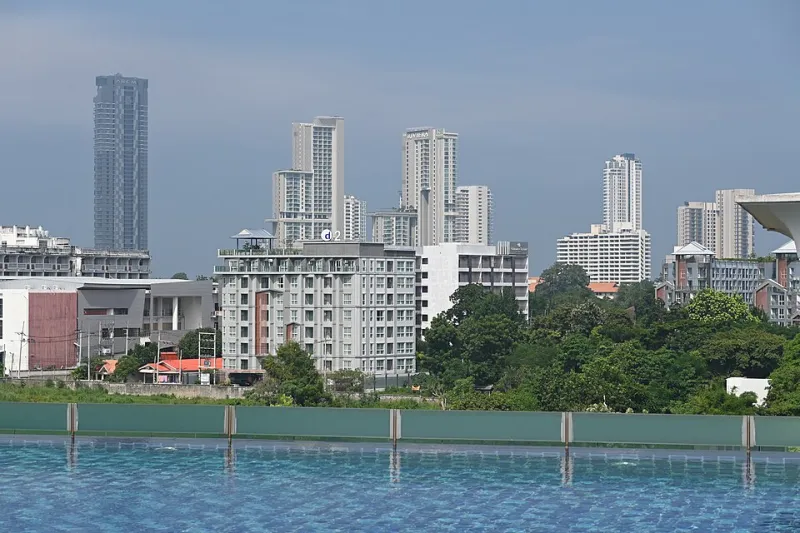
Drive through Monterrey on any given morning and you'll count cranes the way kids count out-of-state license plates on a road trip. They're everywhere — punching into the sky above Valle Poniente, clustered along the emerging corridors of García and Apodaca, and reshaping entire blocks in neighborhoods that barely registered on investment maps five years ago.
This isn't a real estate bubble inflating on speculation. It's a city responding to genuine, sustained demand — from nearshoring manufacturers setting up operations across the metro, from a growing professional class that wants urban amenities without US price tags, and increasingly, from American buyers and remote workers who've decided that a Monterrey address makes a lot of financial sense. The construction boom is both a symptom of that demand and an invitation to participate in what comes next.
Why Monterrey Is Building at This Scale Right Now
Context matters here. Mexico's manufacturing sector has absorbed an enormous wave of investment over the past few years as global companies restructure supply chains closer to the US border. Monterrey — already the industrial and financial capital of northern Mexico — has been one of the primary beneficiaries of this nearshoring trend.
That industrial growth doesn't stay contained to factory floors. It drives housing demand, retail development, hospitality investment, and urban infrastructure upgrades. When Tier 1 suppliers and logistics companies establish regional headquarters in a city, their executives need somewhere to live. Their employees need apartments. Their clients need hotels. The ripple effect on residential real estate is real and measurable.
Add to that a municipal government that has been actively courting mixed-use development and transit-oriented projects, and you have the conditions for a construction cycle that feels less like a boom-bust pattern and more like a structural shift.
The Neighborhoods Attracting the Most Development Activity
Valle Poniente and its Extensions
If you've been tracking Monterrey real estate for any length of time, you already know Valle Poniente. What's newer is how development is leapfrogging beyond its established core into adjacent zones — think the areas pushing toward Santa Catarina and the foothills of the Sierra Madre. Developers are betting that infrastructure improvements will make these pockets significantly more accessible within the next few years, and they're pricing land accordingly. Buyers who move now are essentially buying into the infrastructure thesis.
García: The Sleeper Market
García sits to the west of the metro and has historically flown under the radar for everyone except locals who wanted more space for less money. That's changing. Several large-scale residential communities targeting middle and upper-middle income buyers are under active construction here, with amenities packages — clubhouses, green space, security infrastructure — that would have seemed aspirational for this area just a few years ago. Pricing is still well below comparable product in the established premium corridors, which is exactly why it's worth paying attention to.
Apodaca and the Industrial Corridor
Apodaca isn't glamorous, but it might be the most economically logical bet in the metro right now. Its proximity to the industrial parks driving nearshoring employment means housing demand here isn't speculative — it's tied to actual job creation. The development pipeline in Apodaca skews toward higher-density residential product: mid-rise condos and townhome communities designed for professionals who want to live close to where they work. Rental yields in this submarket are worth investigating seriously.
Urban Core Revitalization
Downtown Monterrey has been the subject of revitalization conversations for years, and the pace of actual execution is finally starting to match the rhetoric. Several mixed-use projects combining residential units with ground-floor retail and co-working space are either under construction or in late-stage permitting. These projects are targeting a younger, urban demographic — and they're attracting attention from investors who see parallels to the downtown revival cycles that played out in US cities like Detroit, Nashville, and Oklahoma City over the past decade.
What New Construction Means for US Buyers Specifically
Buying pre-construction or newly built property in Monterrey comes with a different risk-reward profile than purchasing an existing home. Here's how to think about it:
Appreciation potential is front-loaded in emerging submarkets. The biggest gains typically accrue to buyers who enter before infrastructure improvements are complete and before a neighborhood's reputation catches up to its reality. That means tolerating some uncertainty — but it also means capturing the value creation that later buyers will pay a premium for.
Developer reputation is everything. Mexico's new construction market has its share of projects that have stalled, been delivered late, or failed to match their marketing materials. Before committing to a pre-sale (known locally as a preventa), research the developer's track record rigorously. Have they delivered previous projects on time? What do existing owners say? A local real estate attorney and a buyer's agent with on-the-ground experience are invaluable here.
Currency dynamics can work in your favor. US buyers funding a purchase in pesos while earning in dollars have, at various points in recent history, benefited from favorable exchange rates that effectively discounted the purchase price. This cuts both ways and shouldn't be the primary investment thesis — but it's a factor worth understanding.
New construction often comes with lower maintenance headaches. For buyers planning to hold a Monterrey property as a rental or part-time residence, a new-build reduces the near-term maintenance burden considerably compared to older inventory.
Positioning Yourself Ahead of the Market
The buyers who tend to do best in a development-driven market aren't the ones who wait for certainty — they're the ones who do enough research to get comfortable with calculated uncertainty. That means visiting the submarkets you're considering in person, not just browsing listings from a laptop in Dallas. It means talking to people who already own in those areas. It means understanding the infrastructure timeline, not just the developer's pitch deck.
Monterrey is building at a scale that reflects genuine confidence in its own trajectory. For US buyers who've been curious but haven't yet made a move, the cranes dotting the skyline aren't a warning sign — they're an invitation to do your homework and decide whether this city's next chapter is one you want to be part of.
The open houses are waiting.