Five Monterrey Neighborhoods That Smart US Investors Are Watching Closely in 2025
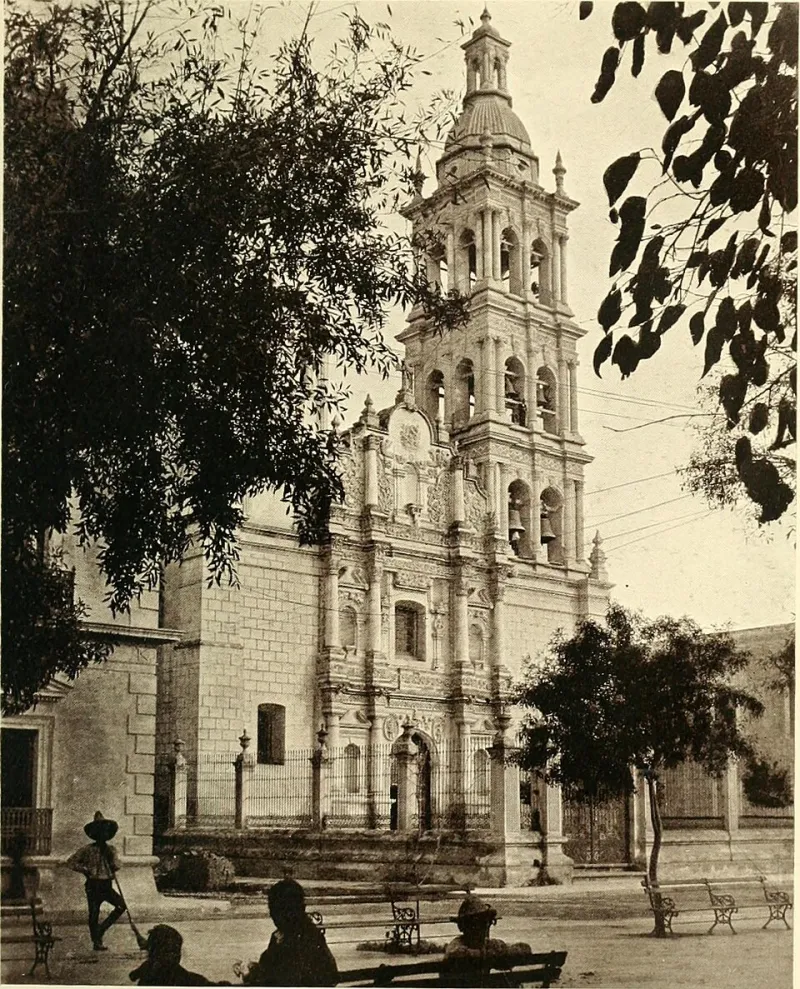
Photo: Internet Archive Book Images, No restrictions, via Wikimedia Commons
Every real estate market has its version of the same story: the neighborhood everyone wishes they'd bought into five years ago. In Monterrey, that story is being written right now — and it's not being written in San Pedro.
Don't get us wrong. San Pedro Garza García remains one of the most desirable addresses in northern Mexico, and property values there reflect that. But for US buyers looking for genuine appreciation upside — the kind that comes from getting in before a neighborhood fully arrives — the more interesting plays are happening in areas that haven't yet made it onto the international radar.
We spent time talking to local developers, relocation consultants, and real estate agents who work with foreign buyers to identify five Monterrey-area zones worth a serious look in 2025.
1. Valle Oriente: The Established Edge That's Still Growing
Valle Oriente occupies an interesting middle ground — it's no longer a secret, but it hasn't fully peaked either. Located along the eastern corridor of San Pedro, this mixed-use district has seen explosive commercial development over the past decade, and the residential market is catching up fast.
What's drawing buyers now is the area's walkability relative to the rest of Monterrey — a genuine rarity in a city built around the car. Proximity to the Vía Cordillera business corridor and several major corporate campuses makes it a natural fit for professionals, and the rental demand from that demographic has been consistently strong. New mid-rise residential towers are delivering regularly, and pre-sale prices are still running 15–20% below comparable finished units in San Pedro proper.
For US buyers interested in buy-and-hold rental strategies, Valle Oriente offers something hard to find elsewhere in the metro: built-in tenant demand from a stable, high-income renter pool.
2. Cumbres: Suburban Scale, Surprising Momentum
Cumbres has long been one of Monterrey's most sprawling suburban districts — a vast residential zone in the northwest that was historically associated with middle-class family housing rather than investment upside. That narrative is shifting.
Several factors are converging to change Cumbres's trajectory. The extension of the Monterrey Metro's Line 3 has improved connectivity dramatically, cutting commute times to the city center and making the area accessible to a broader range of renters and buyers. Meanwhile, a wave of commercial development — new shopping centers, medical facilities, and private schools — has raised the neighborhood's self-sufficiency and appeal.
Property prices in Cumbres remain well below the city's premium zones, with single-family homes available in the $120,000 to $200,000 USD range. For US investors who want residential scale without a massive capital outlay, this is one of the few areas in the Monterrey metro where that entry point is still realistic.
3. Apodaca: The Industrial Halo Effect
Apodaca doesn't show up on lifestyle destination lists, and that's exactly the point. This municipality northeast of Monterrey's city center is home to a massive concentration of manufacturing and logistics operations — including significant aerospace and automotive suppliers — and the housing demand generated by that employment base is substantial and growing.
The investment thesis here is straightforward: Nearshoring is real, it's accelerating, and Apodaca sits at the center of it. As more US and international manufacturers relocate operations to northern Mexico to shorten supply chains, the demand for quality workforce housing in Apodaca climbs with it. Several developers have responded with purpose-built rental communities targeting mid-level industrial employees — a segment that's historically been underserved.
Yields on residential rentals in Apodaca are among the highest in the Monterrey metro, often running 7–9% annually, though appreciation has historically been slower than in more aspirational neighborhoods. For cash-flow-focused investors, it's a compelling trade-off.
4. Carretera Nacional Corridor: Where the Mountains Meet the Market
Stretch south from Monterrey's urban core along the Carretera Nacional and you'll find one of the metro's most scenically dramatic real estate corridors — a stretch of development hugging the Sierra Madre foothills that's attracting a very different kind of buyer.
This corridor, which runs through municipalities like Santiago and connects to areas like Chipinque and Bosques del Vergel, has become a magnet for buyers seeking larger lots, mountain views, and a slower pace of life without fully leaving the metro behind. It reads, in some ways, like the Monterrey equivalent of what the Hill Country is to Austin — close enough to the city to be practical, far enough to feel like a genuine escape.
US buyers who've relocated to Monterrey for work but want a residential experience that doesn't feel like a dense urban apartment are increasingly gravitating here. Lot sizes are generous, architectural freedom is greater than in more regulated urban zones, and the scenery is legitimately spectacular. Pre-construction opportunities along this corridor are still available at prices that look very different from what comparable mountain-view properties in the US would cost.
5. Escobedo: The Underdog With Infrastructure Tailwinds
General Escobedo sits just northwest of Monterrey's urban core and has spent most of its recent history as a working-class residential and light industrial municipality that didn't attract much outside investment attention. That's starting to change — and the catalyst is infrastructure.
Major road improvements connecting Escobedo to the broader metro, combined with ongoing commercial development along its main arteries, are raising the neighborhood's profile among developers who specialize in affordable housing and workforce communities. Several large-scale residential projects broke ground in 2023 and 2024, targeting first-time buyers and renters in the 25–40 age bracket — a demographic that's growing fast in the Monterrey metro.
For US investors, Escobedo offers the lowest entry points of any zone on this list — properties can be acquired in the $80,000 to $130,000 USD range — with appreciation potential that's tied directly to the infrastructure investment timeline. It's the highest-risk, highest-upside option on this list, and it suits investors with a longer time horizon and a tolerance for ground-floor uncertainty.
Getting Ahead of the Market
The neighborhoods above aren't secrets to everyone — local developers and Mexican investors are already active in all of them. But they remain well below the radar for most US buyers, who tend to focus on the same handful of premium zones they've read about online.
The buyers who've done well in Monterrey over the past decade share a common trait: they moved before consensus formed. They bought in neighborhoods that felt slightly ahead of their time, held through the development cycle, and came out the other side with assets that had genuinely appreciated.
That window doesn't stay open forever. If you're watching Monterrey from the sidelines waiting for more certainty, just know that certainty has a price — and in real estate, it usually comes in the form of a much higher cost per square meter.
The neighborhoods above are where the next chapter of Monterrey's growth story is being written. Whether you're buying your first investment property or diversifying a portfolio, it's worth knowing where the smart money is already looking.