Buy the Block Before the Buzz: Monterrey's Emerging Streets Poised for Major Gains Before 2030
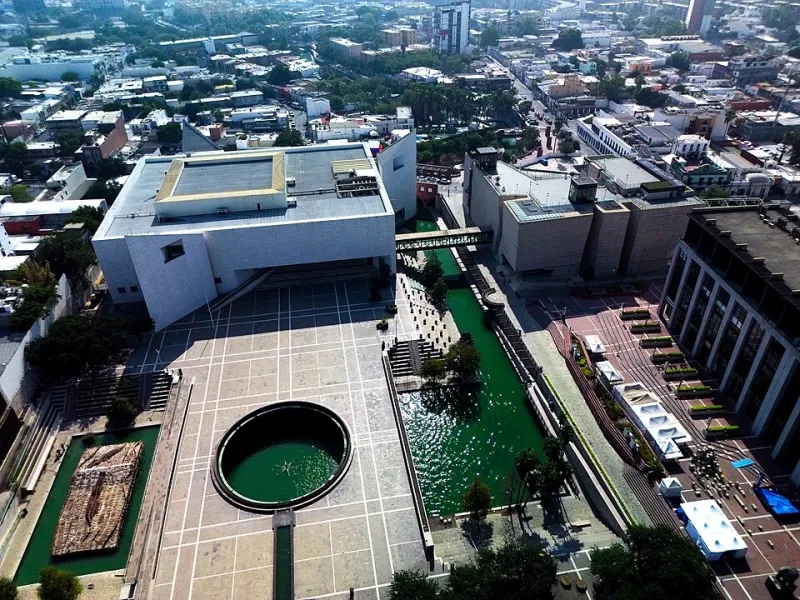
Photo: ProtoplasmaKid, CC BY-SA 4.0, via Wikimedia Commons
There's a certain kind of real estate investor who always seems to have bought in the right neighborhood five years before everyone else figured it out. They weren't lucky. They were reading the signals that most people ignore—the new transit stop, the corporate headquarters breaking ground three blocks away, the coffee shop that doesn't belong in a neighborhood yet but somehow just opened there anyway.
Monterrey in 2025 is full of those signals. And if you know where to look, the map of where serious appreciation is headed before 2030 is starting to come into focus.
Why Monterrey's Appreciation Story Is Still Early
Let's set the stage. Monterrey is already Mexico's wealthiest metro area by per-capita income, the engine of its manufacturing sector, and increasingly a destination for nearshoring investment from US companies rethinking their supply chains. The big institutional money has already priced that story into San Pedro Garza García and parts of Valle Oriente.
But Monterrey is a sprawling, multi-nucleated city, and the ripple effects of that economic momentum haven't reached every neighborhood equally—yet. The corridors that are just beginning to absorb spillover investment, infrastructure upgrades, and demographic pressure from younger professional households are where the next generation of appreciation is being built.
Here's what the indicators are pointing to.
The Contry/Cumbres Transition Zone
Contry and Cumbres have long been middle-class residential stalwarts—solid, established, not particularly exciting from an investment standpoint. But the streets sitting on the edge of these colonias, particularly those running toward the expanded Carretera Nacional corridor, are seeing something new: mixed-use infill development and boutique commercial openings that weren't there two years ago.
The driver here is demographic. Younger Regio professionals who can't afford San Pedro but want walkable amenities are pushing into these transitional zones and upgrading them fast. When a neighborhood's coffee-shop-to-taquería ratio starts shifting, prices tend to follow within 18 to 36 months. Several streets in the Contry Sur area are already showing that pattern.
Escobedo's Industrial-to-Residential Flip
General Escobedo doesn't show up on most US buyers' radar—and that's exactly why it's worth watching. The municipality sits just north of Monterrey proper and has historically been dominated by industrial parks and logistics facilities. That's still true. But the nearshoring boom has supercharged employment in this zone, and the workers filling those jobs need somewhere to live.
New residential developments are sprouting up along the Boulevard Díaz Ordaz extension and near the newer industrial park clusters. These aren't luxury builds, but they're well-constructed, well-located relative to employment centers, and priced at levels that generate strong rental yields today while sitting in the path of future appreciation as the area fills in. For US investors comfortable with a five-year horizon, entry prices here are still accessible.
Apodaca's Airport Adjacency Play
Apodaca is another municipality that US buyers tend to overlook because it doesn't have the cachet of San Pedro or the trendiness of Barrio Antiguo. But it has something arguably more durable: proximity to General Mariano Escobedo International Airport and a growing cluster of aerospace and advanced manufacturing facilities that employ a high-income professional workforce.
The streets immediately surrounding the newer residential developments in southern Apodaca—particularly those with direct access to Highway 85 and the Monterrey-Saltillo corridor—are seeing consistent price appreciation driven by that employment base. When companies like Kia, Caterpillar, and a growing list of US nearshoring operations keep expanding their local footprints, the residential real estate around those facilities tends to move in one direction.
Barrio Antiguo's Overlooked Edges
Everyone knows the core of Barrio Antiguo has been gentrifying for years. What's less discussed is what's happening on its edges—specifically the streets pushing toward Colonia Independencia to the south and toward the Macroplaza-adjacent blocks that have historically been more commercial than residential.
The city's ongoing investment in pedestrian infrastructure and cultural programming around the Macroplaza is slowly making these fringe blocks more livable, and a wave of adaptive reuse projects is converting older commercial buildings into loft-style residential units. These aren't finished neighborhoods—which is precisely the point. The buyers getting in now, while the sidewalks are still uneven and the corner store hasn't been replaced by a wine bar yet, are the ones who'll have the best stories to tell in 2029.
The Infrastructure Signal You Shouldn't Ignore
If there's one macro indicator that US investors should be tracking above all others, it's the expansion of Monterrey's Metrorail system and the associated BRT (Bus Rapid Transit) corridors that are filling gaps in the network. Globally and historically, property values within walking distance of new transit stops appreciate faster than the surrounding market—often by a meaningful margin.
Several planned and under-construction transit extensions in Monterrey's northern and northeastern zones are set to come online before 2028. The streets within a 10-minute walk of those future stops—particularly in areas that are currently undervalued relative to their eventual transit access—represent some of the most asymmetric opportunities on the current map.
How to Actually Use This Information
Reading about emerging neighborhoods is one thing. Acting on it intelligently requires a few additional steps. First, work with a local buyer's agent who has granular knowledge of specific streets and developments—not just colonia-level familiarity. The difference between the right block and the wrong one in a transitional neighborhood can be significant.
Second, look at what's been permitted, not just what's been built. Mexico's municipal permitting records, while sometimes opaque, can reveal where commercial development is clustering before it becomes visible on the street. An experienced local attorney or real estate professional can help you read that landscape.
Third, be honest about your timeline. Emerging neighborhoods reward patience. If you need liquidity in 18 months, established areas are safer. If you can hold for four to six years, the corridors described here have the fundamentals to deliver returns that the already-discovered parts of Monterrey simply can't match anymore.
The Window Is Open—But Not Forever
Monterrey's broader economic story—nearshoring, infrastructure investment, demographic growth—is well-documented at this point. What isn't fully priced in yet is how that story plays out at the street level in neighborhoods that are still one or two development cycles behind the curve. That gap between macro momentum and micro pricing is where real estate returns actually get made.
The buyers who figure that out in 2025 won't be the ones reading the headlines in 2030. They'll be the ones who wrote the next chapter.