Property, Passports, and Paperwork: What US Citizens Should Know Before Buying Real Estate in Monterrey
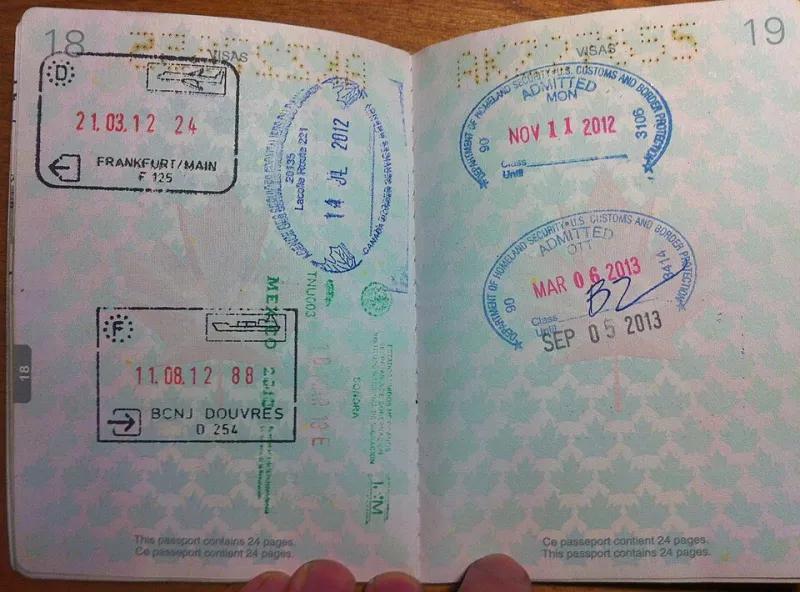
Photo: Cohen.Canada, CC BY-SA 2.0, via Wikimedia Commons
There's a persistent myth floating around expat Facebook groups and dinner conversations in San Pedro: buy a home in Mexico, get residency. It's a tidy idea. It's also mostly wrong — or at least far more complicated than a single sentence suggests.
For Americans considering a purchase in Monterrey, the intersection of real estate, immigration status, and cross-border tax obligations is one of the least glamorous but most consequential parts of the process. Get it right and you're set up for a smooth life. Get it wrong and you're dealing with fines, compliance headaches, or a visa situation that doesn't match your lifestyle.
Let's clear the air.
Does Buying Property in Monterrey Give You the Right to Live There?
Short answer: no, not automatically.
Mexican law allows foreigners — including US citizens — to purchase real estate throughout most of the country, including Monterrey. But owning a home doesn't grant you any immigration status whatsoever. You could own three condos in Valle and still be limited to the 180-day tourist visa (FMM) that Mexico grants to US visitors on arrival.
Residency is a separate application, processed through a different branch of the Mexican government (the Instituto Nacional de Migración, or INM), and it has its own requirements that have nothing to do with your real estate portfolio.
This distinction trips up a lot of buyers. They close on a property, assume they have some elevated right to stay, and then find themselves scrambling when they want to spend extended time in Mexico.
The Path to Temporary and Permanent Residency
Here's where property ownership can indirectly help, even if it doesn't directly grant residency. Mexico's temporary residency (Residente Temporal) visa can be obtained through several financial pathways — demonstrating sufficient income, savings, or investment in Mexico. Owning real estate can be used as evidence of financial ties to the country, and in some cases, a property valued above a certain threshold (which changes periodically — always verify current figures with a Mexican immigration attorney) may qualify as an investment route to temporary residency.
But "can be used as evidence" and "automatically qualifies you" are very different things. The process still requires a formal application, documentation, consular appointments (typically done at a Mexican consulate in the US before you move), and INM approval. It's a process, not a perk.
Permanent residency follows after four years of holding temporary residency, or can sometimes be obtained more quickly through specific qualifying criteria.
What About Your US Status? Does Any of This Affect Green Cards or Citizenship?
For US citizens — people who already hold a US passport — buying property in Mexico has essentially zero impact on your American citizenship. You can own real estate anywhere in the world without jeopardizing your US passport.
For lawful permanent residents (green card holders), the situation deserves more care. Extended absences from the United States can raise questions about whether you've abandoned your permanent residency. If you're spending most of your time in Monterrey, even in a home you own, USCIS may view that as evidence of intent to relocate. The threshold that typically triggers scrutiny is continuous absence beyond six months, with absences over a year creating a legal presumption of abandonment.
Green card holders who want to split time between Monterrey and the US should talk to a US immigration attorney before making any extended moves south. A re-entry permit or other protective steps might be worth pursuing.
The Tax Reporting Side: FBAR, FATCA, and Foreign Property
This is where a lot of Americans get blindsided. The US taxes its citizens and permanent residents on worldwide income — it doesn't matter where you live or where your money sits.
If you own rental property in Monterrey and collect rental income, that income needs to be reported on your US tax return. If you have Mexican bank accounts (which you almost certainly will if you own property there), and those accounts hold over $10,000 at any point during the year, you're required to file an FBAR (FinCEN Form 114). If the aggregate value of your foreign financial accounts exceeds $50,000, FATCA reporting via Form 8938 may also apply.
None of this is designed to punish you for owning international property — it's just the US tax system doing what it does. But the penalties for non-compliance are steep, and "I didn't know" is not a defense that holds much weight with the IRS.
A US-based CPA with international tax experience, ideally one familiar with US-Mexico situations, is not optional here. It's a cost of doing business.
Fideicomiso: The Trust Structure and What It Actually Means
One more layer worth understanding: in Mexico's restricted zones (within 50 kilometers of coastlines or 100 kilometers of international borders), foreigners must hold property through a bank trust called a fideicomiso. Monterrey is not in a restricted zone, so most buyers there can hold title directly in their own name — a simpler and less expensive arrangement.
Still, some buyers choose a fideicomiso or a Mexican corporation (S.A. de C.V.) for estate planning or liability reasons. Each structure has different implications for how the property is treated under both Mexican and US law, so it's worth discussing with both a Mexican notario público and a US attorney before deciding.
The Bottom Line for US Buyers
Buying real estate in Monterrey is genuinely accessible for Americans, and the legal framework is more straightforward than in many other countries. But "accessible" doesn't mean "consequence-free." Understanding where your property fits within your broader immigration picture — especially if you hold a green card, have dual nationality questions, or plan to spend significant time in Mexico — is work you need to do before you sign, not after.
The good news: none of this is insurmountable. With the right legal and tax advisors in your corner, the paperwork is manageable and the lifestyle payoff is very real.