What US Families Actually Find When They Go Looking for Good Schools in Monterrey
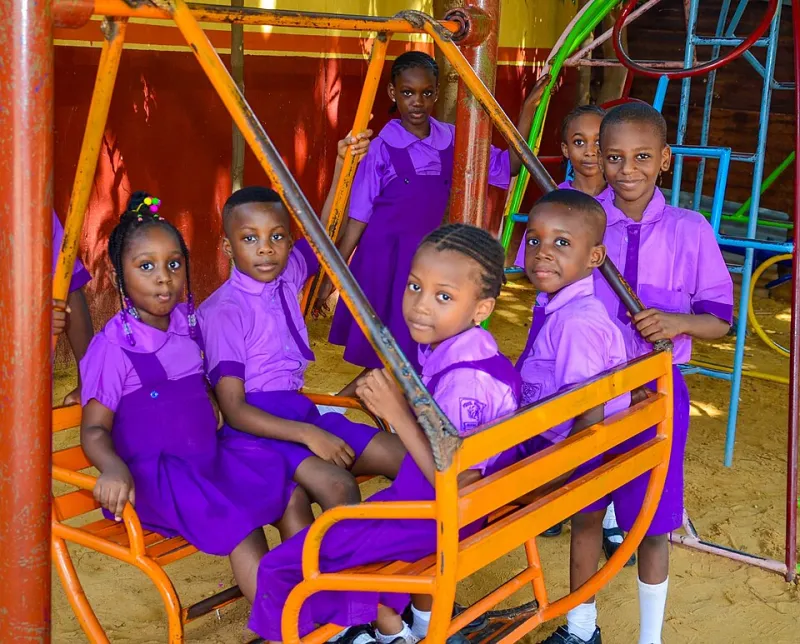
Photo: Ramma isa danladi, CC BY-SA 4.0, via Wikimedia Commons
Talk to any American family considering a move to Monterrey and the conversation eventually lands on the same nervous question: What about the kids? It's understandable. In the US, the school district practically is the neighborhood. Families buy homes specifically to land inside certain attendance zones, and resale value follows accordingly.
Monterrey doesn't work that way. And once you understand why, the whole calculus of choosing where to live shifts in ways that most relocation guides never bother to explain.
The Zoning Myth, Debunked
In most American cities, your address determines your public school. Full stop. Monterrey operates on a completely different model. Mexico's public school system — the SEP system — does assign students to local schools, but the overwhelming majority of US expat families aren't enrolling in public schools. They're choosing from a robust ecosystem of private bilingual and international institutions, and those schools draw students from across the metro area regardless of where families happen to live.
What that means practically: you don't need to live next door to the school. You need to live somewhere with a reasonable commute to the school you've chosen — and in a city where private school transportation services (known as rutas) are widely available, even that barrier is lower than you'd expect.
The Private School Landscape Is Broader Than You'd Guess
Monterrey has a genuine concentration of high-quality private education that surprises most newcomers. The city is home to institutions offering International Baccalaureate programs, Cambridge curriculum, and US-accredited diplomas. Schools like the American School Foundation of Monterrey (ASFM), Colegio Americano, and a growing number of bilingual prep schools have been educating the children of executives, diplomats, and business families for decades.
These aren't fallback options. ASFM, for instance, has alumni pipelines into US universities that many American private schools would envy. The student bodies are internationally diverse, the extracurriculars are competitive, and the bilingual environment produces kids who graduate genuinely fluent in Spanish — something most US schools simply can't offer.
For families relocating from cities where private school tuition runs $30,000 to $50,000 a year, Monterrey's top-tier options land in a range that feels almost disorienting. Annual tuition at premier bilingual institutions typically falls somewhere between $5,000 and $12,000 USD depending on grade level and school, though fees for materials, uniforms, and activities add to that base figure. Still, the value comparison to comparable US institutions is stark.
Enrollment Realities: What the Process Actually Looks Like
Enrollment at Monterrey's international schools is competitive but not impenetrable, especially for families arriving mid-year or on short timelines. Most schools maintain a waitlist culture for popular grade levels, so starting the process before you've signed a lease is genuinely important — not just good advice.
Documentation requirements typically include prior school records, immunization history, and proof of legal residency in Mexico. For US families with FM2 or FM3 residency status (or those in the process of obtaining it), schools are generally experienced at working through the paperwork. A few institutions have dedicated international admissions coordinators who speak English and understand the specific situation of families arriving from the States.
Language placement is another practical consideration. Some kids arrive in Monterrey already bilingual; many don't. Schools vary in how they handle native English speakers versus students who need Spanish support, so it's worth asking directly about immersion pacing and language support resources before committing.
So Does Neighborhood Still Matter?
Here's where it gets interesting for the property side of the equation. Even though you're not buying into a school district, proximity to the clusters where top private schools are located does influence the Monterrey real estate market — just in a subtler, more nuanced way than Americans are used to.
San Pedro Garza García hosts a dense concentration of private schools and remains the neighborhood most associated with family-oriented expat living. Property prices there reflect that. But families who do their homework are increasingly finding that neighborhoods like Cumbres, Valle Oriente, and parts of Carretera Nacional offer solid access to quality schools without the San Pedro premium — especially when rutas and school transportation are factored in.
The resale value question is also worth thinking about differently. In Monterrey, properties near international schools don't spike in value the way homes in top US school districts do, but they do attract a consistent pool of buyers: incoming expat families, international executives, and upwardly mobile local professionals who prioritize education. That demographic stability translates to steady demand, which is its own kind of value.
The Honest Trade-Offs
No relocation story is complete without the friction points, and schooling in Monterrey has a few worth naming.
The school calendar doesn't align with the US academic year. Mexican private schools typically run August through June with different holiday rhythms, which can create awkward transitions for families moving mid-year or for kids who want to maintain ties to cousins and friends back home.
Social adjustment is real. Kids moving to Monterrey — even to English-instruction schools — are entering a social ecosystem with its own dynamics, and the transition can take a full academic year to feel settled. That's not unique to Monterrey, but it's worth setting realistic expectations.
And for families with kids approaching college age, the question of US university admissions from a Mexican high school is one worth researching carefully. Most accredited international schools in Monterrey have experience navigating this, but parents should ask specific questions about SAT/ACT preparation, transcript translation, and counselor resources for US applications.
What to Prioritize When You're House Hunting
If you're a US family evaluating neighborhoods in Monterrey with school-age kids, here's a practical framework:
Visit the schools before you visit the houses. Seriously. Nail down your top two or three school options, check their locations, and then let commute time inform your neighborhood shortlist — not the other way around.
Ask about rutas coverage. School transportation services are widely available and well-organized. A 20-minute drive in a supervised van is often more manageable than it sounds, and it expands your housing options considerably.
Think about the full household. Great schools near neighborhoods that don't serve the rest of your family's lifestyle is a trade-off that tends to wear thin. Monterrey has enough options that you shouldn't have to choose between school access and a neighborhood you actually enjoy.
Factor in the bilingual upside. For many US families, the fact that their kids will graduate genuinely bilingual — with a real international perspective — is one of the most compelling arguments for making the move in the first place. That outcome doesn't happen by accident; it happens because you chose a school environment that takes it seriously.
Monterrey isn't a compromise on education. For families willing to approach it on its own terms, it's often an upgrade — just not the kind that shows up on a school district map.